
Archaeologist Finds One Step in Valley of the Kings, Calls It 'the Beginning of a Staircase,' Refuses to Say More
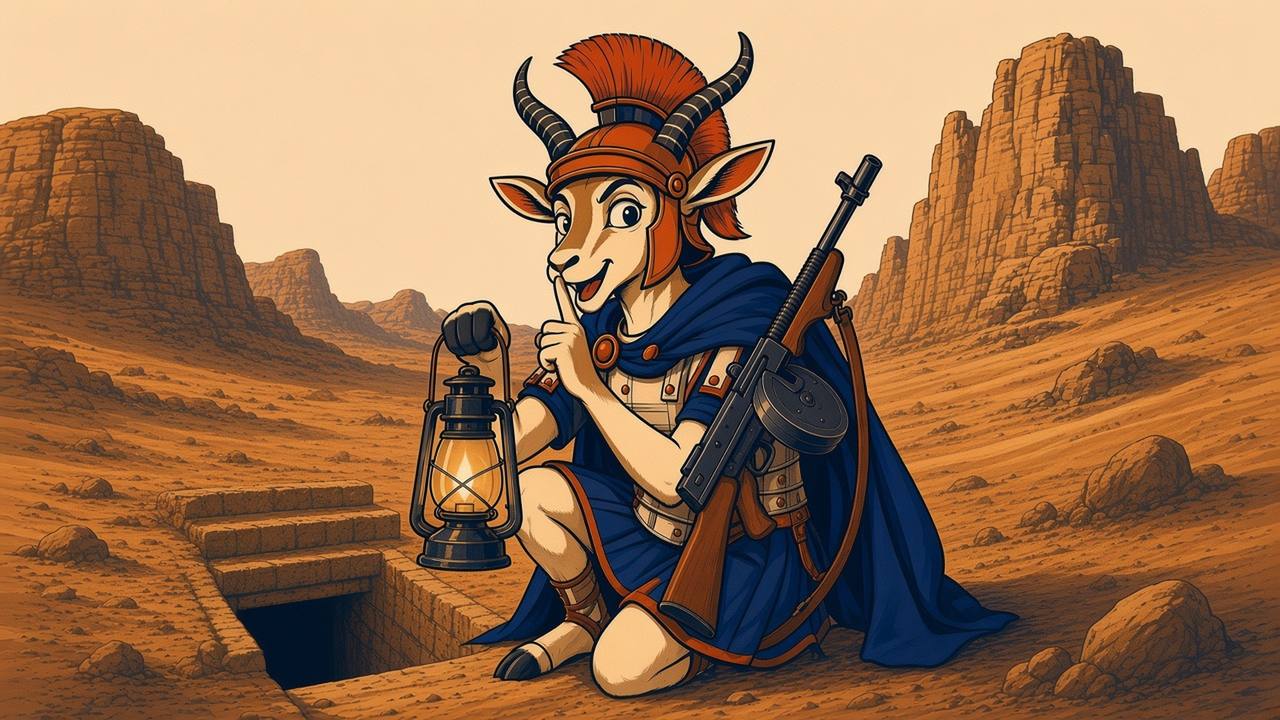
At about ten o'clock this morning, beneath the first of a row of ancient workmen's huts below the tomb of Ramesses VI, the excavation of Mr. Howard Carter struck something that was not rubble. It was a step, cut into the bedrock. Archaeologists across Egypt are calling it a step. Mr. Carter is calling it the beginning of a steep excavation, which is the same thing said with a straight face and a pounding heart.
Mr. Carter has dug in the Valley of the Kings for years with the backing of George Herbert, the fifth Earl of Carnarvon, and until today had found very little. Many experts believe the valley is empty. The American Theodore Davis, who held the digging rights before them, declared it exhausted. Lord Carnarvon, who pays for all of it, is said to have agreed this summer to fund one final season. This is day four of that season.
Accounts of the discovery differ. One version of the story, which will be told for a century, credits a young water carrier who was clearing a spot for his jars. Mr. Carter's own diary entry for the day says that he discovered it. The Gazette notes that the diary belongs to Mr. Carter.
The staircase appears to be in the style of the Eighteenth Dynasty, the line of pharaohs who ruled at the height of Egypt's New Kingdom. Whose tomb it might be, nobody will say. One name keeps coming up, that of a minor boy-king named Tutankhamun, whose tomb has never been found and of whom almost no one outside Egyptology has heard. Insiders expect this to change.
Lord Carnarvon is in England. Mr. Carter is expected to clear the stairs, cable His Lordship and then wait for his arrival before going any further, which will require the rarest archaeological skill of all: not digging.
Asked for comment, the Egyptian Antiquities Service said it would be watching closely. Asked whether anything found inside would belong to Egypt, it said yes. Asked again, by several Englishmen, it said yes again, more slowly.
I Was Told This Valley Was Finished
In my long career I have declared many things finished: the Valley of the Kings, the steam engine, the hat. I stand by most of these.
I had told everyone at my club that there was nothing left under that valley but rubbish and the huts of the men who built the tombs. I now learn that there was something under the huts. This is the sort of detail that ruins a perfectly good expert opinion. I will be issuing a revised opinion shortly, in which I will say that I suspected it all along.
On November 4, 1922, Howard Carter's team, funded by George Herbert, 5th Earl of Carnarvon, uncovered the first step of a rock-cut staircase beneath ancient workmen's huts near the tomb of Ramesses VI in the Valley of the Kings. By the next evening they had exposed the top of a plastered, sealed doorway. Carter refilled the stairwell and cabled Carnarvon in England: "At last have made wonderful discovery in valley a magnificent tomb with seals intact recovered same for your arrival congratulations." After Carnarvon arrived, the 16-step staircase was fully cleared and the tomb was entered on November 26. It proved to be the nearly intact tomb of the pharaoh Tutankhamun (KV62). A popular later account credits a water boy with spotting the first step; Carter's diary records that he found it. The tomb's treasures stayed in Egypt and are now displayed in Cairo.